
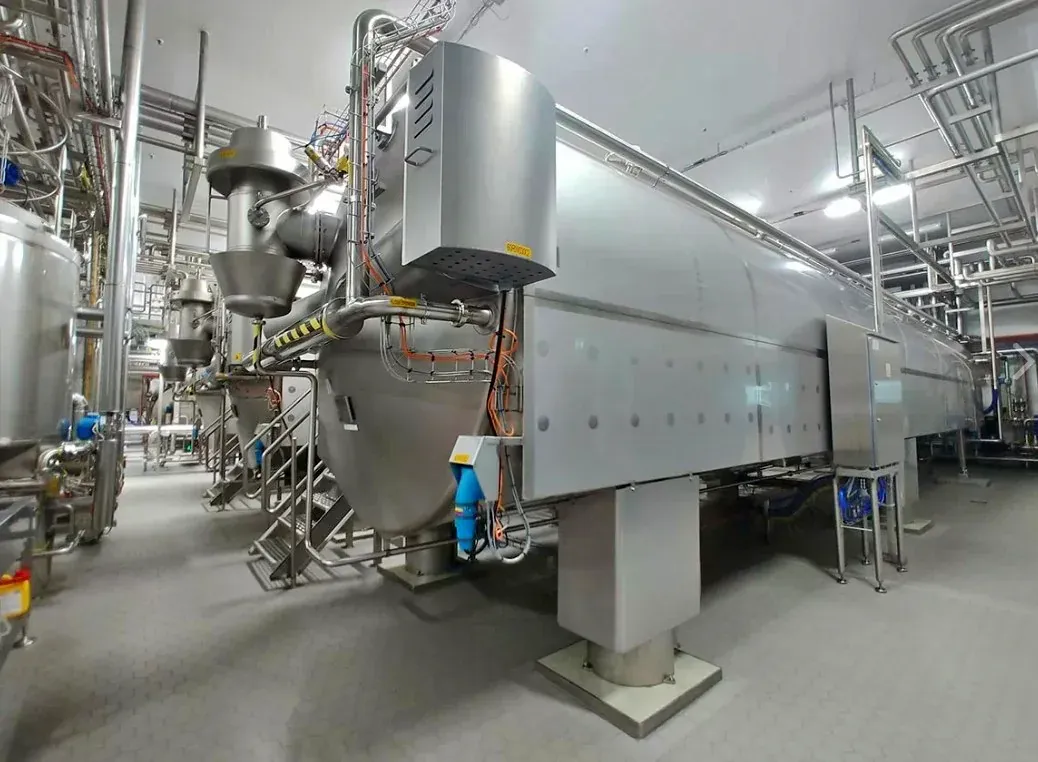
Complete cottage cheese production line
- Curd VATs
- Whey Drainer and Washer/Cooler
- Creamer
- Process consultancy
Line overview
Complete FABERMAQ lines for cottage cheese, from curd setting in VATs through to cream dressing, backed by technical support so you can produce it consistently, repeatably and profitably.
Product
Light, standard or full-fat cottage cheese
Raw material
Skimmed milk
Curd setting
VATs, 10 to 12 hours; 2 or 3 running in parallel
Whey drainage
Whey Drainer: removes approx. 90% of the whey
Washing
Washer/Cooler with temperature-controlled water
Draining
Curd Drainer to control moisture content
Blending
Creamer with dairy cream
Support
Technical consultancy and process definition
Dairy industry
Industrial cottage cheese production lines
Fabermaq can supply complete cottage cheese production lines for a product that has become a solid and growing trend in the dairy sector and is clearly here to stay.
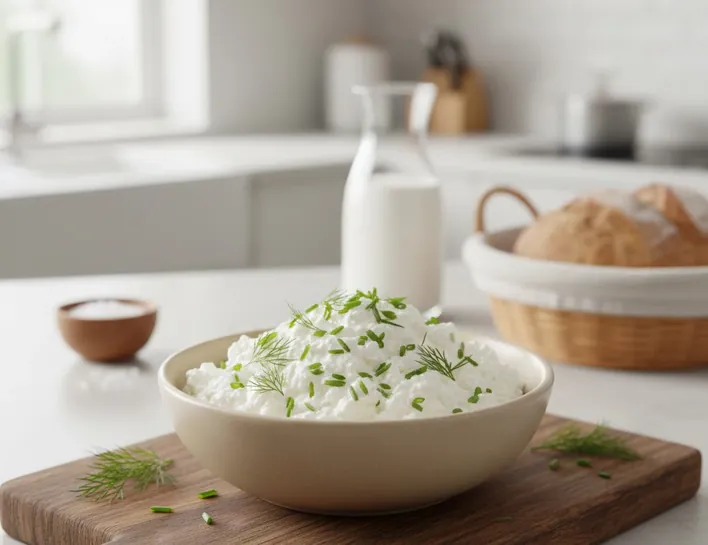
Cottage cheese stands out for its many nutritional benefits: high protein content, low fat (depending on the recipe), easy digestibility and versatility, which make it a key product in the healthy-eating, sports nutrition and functional food segments.
From a processing standpoint, cottage cheese has another important advantage: it is relatively simple to produce and easy to consume, provided you have the right technical know-how and the right process.
However, there is a significant gap in today's dairy market: many producers have not mastered the cottage cheese manufacturing process, or lack the experience needed to produce it consistently, repeatably and profitably.
This is where Fabermaq acts as a technology partner, not only supplying equipment but also advising producers on how to make cottage cheese, supporting them in defining the process, selecting equipment and optimising every production stage.
Step-by-step process
From skimmed milk to cottage cheese ready for packing
How is cottage cheese made?
Cottage cheese production is based on the controlled coagulation of skimmed milk, followed by a series of stages designed to produce a soft, clean curd with a uniform texture.
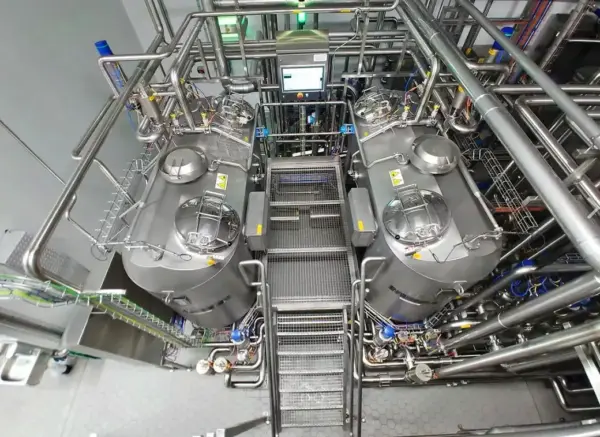
The process begins in curd VATs, where the skimmed milk is acidified using lactic cultures, rennet or other pH adjustment methods, depending on the customer's requirements.
In these VATs, with typical processing times of 10 to 12 hours, the characteristic cottage cheese curd is formed. For efficient operation of an industrial cottage cheese plant, we recommend running two or three VATs in parallel, enabling continuous production and higher daily volumes of milk processed.
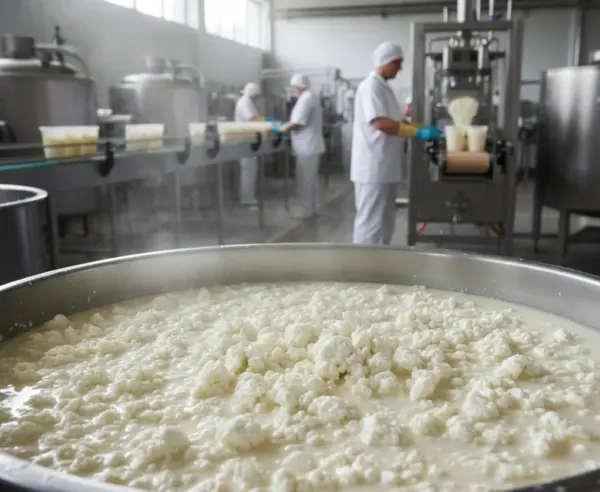
Once the curd has formed…
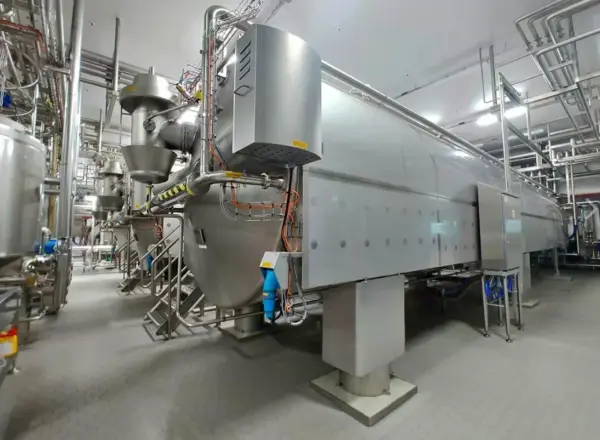
Once formed, the curd is discharged into the continuous processing system. First, the Whey Drainer removes approximately 90% of the whey, gently and in a controlled way, preserving the integrity of the curd particles and preventing them from breaking up.
This step is key to preserving the final texture of the product and preparing the curd for the subsequent stages.
Next, the curd moves to the Washer/Cooler, where it is washed with clean, temperature-controlled water. This removes residual whey, lactose and acidity, improves flavour, stabilises the pH and helps extend the product's shelf life.
A Curd Drainer then removes excess wash water, leaving the curd with a precisely controlled moisture content.
The final production stage
In the final stage, the curd is blended with dairy cream in the Creamer, giving cottage cheese its characteristic creamy texture and sensory profile.
The cream ratio can be easily adjusted to produce light, standard or full-fat versions, in line with the producer's commercial strategy. The finished product is then ready for packing.
Fabermaq as your partner for complete lines
Although cottage cheese is in high demand, many producers have yet to master it. Fabermaq fills this gap in the market, offering not only the cottage cheese processing equipment required but also technical consultancy, production process definition and support throughout the project.
Fabermaq can integrate and supply complete cottage cheese production lines, from curd setting through to final blending and preparation for packing, helping dairy producers diversify their product range, enter a growing market and establish themselves with a high-value-added product.
Benefits
Why choose our cottage cheese production lines?
FABERMAQ's automated lines not only maximise yield and curd definition, but also safeguard the freshness and shelf life of this delicate product.
Our technology handles the curd extremely gently, integrating cutting, cooking and washing systems designed to preserve the structural integrity of the curd particles without subjecting them to mechanical stress that generates fines or product losses.
This approach gives precise control over critical stages such as washing, cooling and blending with the dressing, making it easier to achieve a lumpy, loose and creamy texture.
Manufacturers can therefore diversify their range — from Large Curd or Small Curd variants to low-fat or fruit-blended options — while always ensuring even cream distribution and consistent quality.
Fresh dairy producers are invited to strengthen their operations with FABERMAQ.
With our hygienically designed machinery and closed draining systems, we are the ideal strategic partner for those looking to increase production capacity, minimising contamination risks and ensuring food safety in a high-moisture product.
Our complete lines bring together artisan freshness and industrial efficiency. For more information, to request a technical proposal or to discuss your washing and blending requirements, please get in touch with FABERMAQ.
FAQ
Frequently asked questions about cottage cheese lines
Can't find your answer? Our technical team will advise you with no obligation.
How is cottage cheese made?
Through the controlled coagulation of skimmed milk in curd VATs. The curd then passes through the Whey Drainer, the Washer/Cooler and the Curd Drainer, and is finally blended with cream in the Creamer.
How long does curd setting take?
Typical processing times in the VATs are 10 to 12 hours. We recommend running two or three VATs in parallel to achieve continuous production.
What does the Washer/Cooler do?
It washes the curd with clean, temperature-controlled water to remove residual whey, lactose and acidity, improve flavour, stabilise the pH and extend shelf life.
How much whey does the Whey Drainer remove?
Approximately 90% of the whey, gently and in a controlled way, without breaking up the curd particles.
Can light or full-fat versions be produced?
Yes. The cream ratio in the Creamer is easily adjusted to produce light, standard or full-fat versions.
Does FABERMAQ advise on the manufacturing process?
Yes. As well as supplying the equipment, we provide technical consultancy, production process definition and support throughout the project.
Contact
Contact us
Thank you for choosing FABERMAQ. We are here to help and answer any questions you may have. Please complete the form below and one of our specialists will be in touch shortly.
- Office+34 933 086 597
- Mobile+34 632 721 240
- Emailinfo@fabermaq.com
- AddressC/ del Perú 186 bis, Sant Martí · 08020 Barcelona, Spain
- Spain
- Venezuela
- Colombia
- Argentina
- Peru